Garden of Membranes 1.0
Clandestino Feria de Arte y Creatividad, Santa Cruz , Bolivia 2014
Garden of membranes is a standalone sonic sculpture as well as an immersive and unusual sonic environment using unconventional spatialisation techniques and sounds.
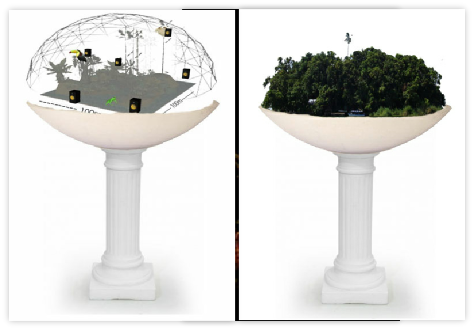
The spatialisation used was, as far as I am aware, the first to use a tiny multichannel speaker array. Speakers less than one inch in size were hidden around a small bonsai forest (fig 1). Electrical signals in the plants roots trigger sounds .
Miniature birds flew from tree to tree and the sounds of tiny animals crawled through the jungle.
SONIC ART, SOUND SCULPTURE AND MICRO SPATIALISATION
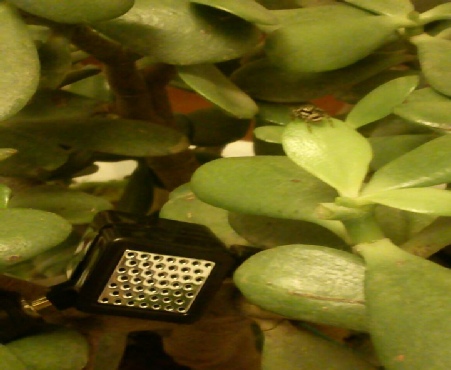
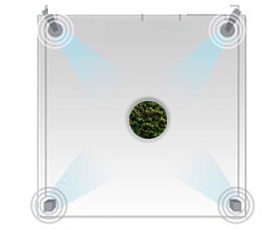
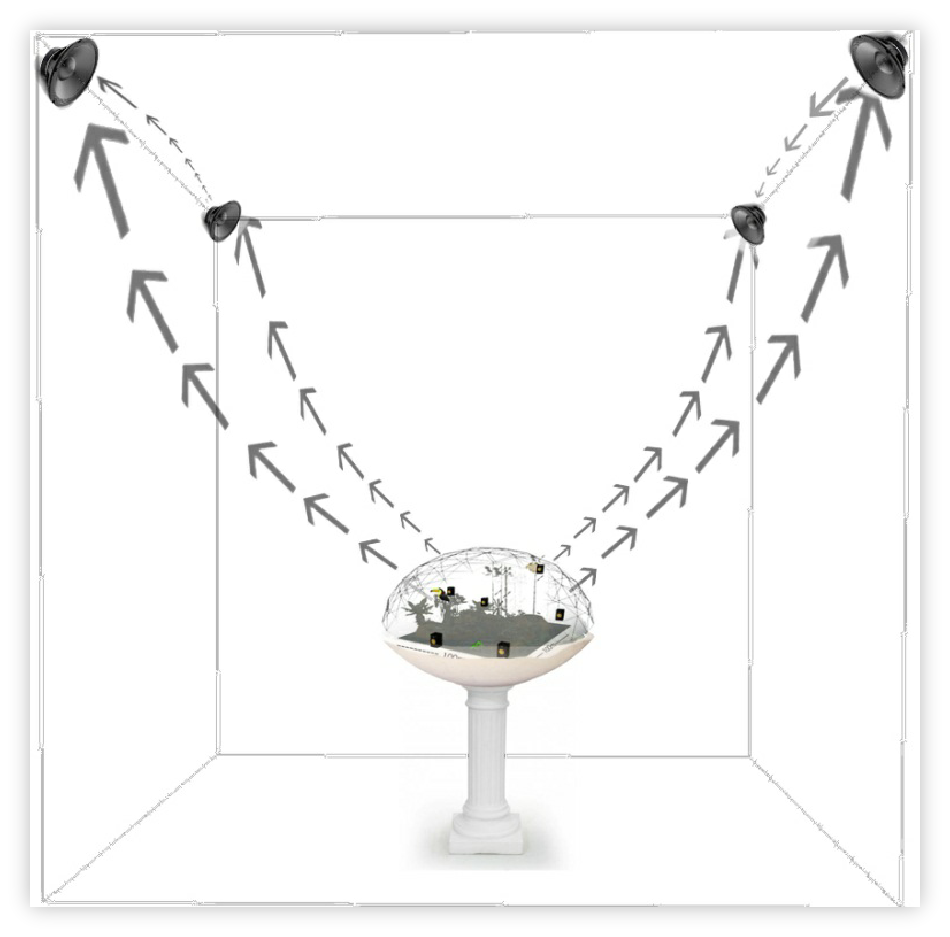
Fig 4. Sounds from miniature speakers in the Bonsai forest panned into larger speakers around the room creating a fountain-like effect
de Augustine Leudaracionn el sistema miniatura ara crear un "ctar udio 3d y todo en miniatura.Fig 3. 4 larger speakers in the corners of the room interact with the miniature soundscape in the middle of the room.
More details of this technique can be read in the paper “An Alternative Approach to 3D Audio Recording and Reproduction” (Leudar, 2014). The “Garden of Membranes” exhibition at the Naughton Gallery was in a much larger space and featured many more speakers around the room. As previously mentioned the centre piece was 3D printed allowing for greater integration of the audio technology and miniature ecosystem
In the room around the sculpture is more vegetation in which larger speakers are hidden (fig 3) The sounds triggered by signals in the electrodes which welled up from the tiny speakers in the forest and then spread out in to the larger space, emulating a kind of “sonic fountain” (fig. 3). The sounds triggered by the electrical signals resembled the curves of the action potential but were only triggered when the signal passed a certain threshold (usually around 100 mV). The spatialisation consisted of a complex interplay between the microcosm (the miniature) and macrocosm (the larger speakers hidden around the room). For example, miniature sounds in the forest might fly to the corners of the room immersing the listeners. This interplay between tiny sounds which the listener could walk around suddenly transforming into larger sounds immersing the listener played with the listener’s sense of proportion and perspective. As with some other installations a sonic chassis using natural sounds was used. The sounds of a miniature rainforest in the Bonsais suddenly expanding and enveloping the listener were particularly effective.
MICRO & MACRO SPATIALISATION
VID 1. A BRIEF EXPLANATION OF HOW THE SPATIALISATION WORKS
Fig 2. A ’sound map’ is created of the jungle using various microphones (left). Secondly this sound map is reproduced in miniature by placing speakers in the same relative positions the microphones were (right) This sonic map is then scaled down to miniature.
The sounds are part composition and part sonic map recorded in the Amazon rainforest. Large soundscenes recorded in the jungle were played back in miniature environments, the technique can however be applied to any size space or any type of soundscape. The sounds were recorded with many microphones placed in different parts of the jungle and then recreated with speakers in the same relative positions (fig. 2 and vid 1) in this case an area of jungle 10,000 m² was reduced to a Bonsai forest 1 m². As long as the initial relative positions of the microphones are replicated and the distance between them scaled down proportionately, the miniature soundscape retains some coherent spatialisation.
MINIATURISED SONIC MAPS
Fig 1. On the left a miniature forest on a plinth, a 1” speaker in middle, on the right the hidden speakers within.